
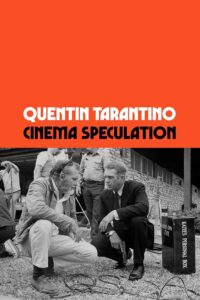
I have to say I was completely engrossed with Tarantino’s insightful book. Highly opinionated, but rigorous in tying together elements of the films discussed which influenced him the most, which stay mainly in the late-1960s to early-1980s. For this reason, it would be right to say CINEMA SPECULATION is an apt title.
Growing up on the films discussed surely creates a different impact for me than for fellow cineastes of a different vintage. Also, being in front of and behind the camera myself is another variable in the equation of discernment, for better or worse. Ultimately, it’s about the takeaway and something critics and historians could not experience even with a thousand primary-tertiary sources is the one-on-one relationship Tarantino had with many of the central figures. This extends to personal and professional dealings with Paul Schrader, Ennio Morricone, Scorcese, and many more. Whether a comparative detriment or asset when waged against the whole of the book and the people in it, who knows? What they do provide are amusing anecdotal pieces of cinema history not to be found elsewhere.
The earlier part of the book cherry-picks pieces of QT’s early life, growing up fatherless, and becoming absorbed in film at an early age from whatever source he could find. While this is not the most exciting thing in town, it does explain a great deal about his immersion and why many of his films are pastiches of these times; a piece of lore well-known to most film geeks. What was surprising about this setup was the nice payoff at the end of the book where Tarantino laments not thanking Floyd, a would-be screenwriter who lived with QT and his mom briefly, and who influenced him in a terrific way and made him want to write. He ends by saying he should have acknowledged him when he won the Academy Award for Screenwriting for DJANGO UNCHAINED, as the man was so integral a part of it.
BULLITT, TAXI DRIVER, THE GETAWAY, DIRTY HARRY, WALKING TALL, DEATHWISH, ROLLING THUNDER…these are ultimately influential films one would expect from Tarantino given his work and age. Sometimes nearly verbatim scenes can be found in his films of these old action and revengematic classics. This is so much the casethat you can find “every film that influenced RESEVOIR DOGS” a number of times online, with a hundred or more direct influences listed, concerning lighting, script, camera movement, and much more. These films vary in genre greatly. This can be said for PULP FICTION all the way to the more recent films as well. The rip-off or “borrowing” factor is not something QT has ever denied or been shy about. He’s not unlike a musician sampling or faking other music in that regard, though I wouldn’t put him in the same bucket as Vanilla Ice, certainly not Milli Vanilli. More like Warhol, borrowing from pop culture to spin a timeless bunch of bits into gold.
Of course, many of these films stand in my own recollection as formative. While I grew up during the Cable TV boom, we were getting channels much earlier, though unavailable commercially and en masse. The reason? My dad was a TV and Radio Repairman and built a parabolic dish in the late-70s. This added the then-new channels HBO, Cinemax, and Showtime to the three local channels we had been trudgingly scanning through . Racy shows like John Byner’s BIZARRE and many unrated (unsupervised) films appeared: EMMANUEL, NANA, FAIRY TALES, TENDRES COUSINS. Exciting pubescent stuff, and stacked alongside mainstream films like HARDCORE and AN OFFICER AND A GENTLEMAN. These played endlessly on a loop, much like the early videos of MTV starting in 1981, which we watched without blinking, waiting for our favorite video to come round again. Would it be “Video Killed the Radio Star” or “Whip It” next?
This era was marked by the beginnings of instant gratification that today we can’t seem to do without. Even with a top-loader VCR and going to the store to find something in the limited video selection, why bother when it’s being pumped right into my home?
While the book could’ve focused on a thousand other films, foreign and domestic from this era, (especially given his many undeniable salutes to the giallo of the 70s), it’s no big secret the ones chosen informed QT the most, but perhaps even more, they informed the genres they inhabit. Not that revenge, for instance, is new. We’ve been thrilled to watch people get what’s coming to them going back to THE COUNT OF MONTE CRISTO. But dressing this familiar thrill in newer tech and language translated to a whole new audience in a new way.
The networking and back-door wheeling and dealing that is inescapable to getting these films made is brought to light in small part in the book. The actual picture is much bigger, but of course, the author doesn’t know all the moving parts, only his particular role and perspective and there’s honesty throughout concerning his singular view.
The ease of the writing is something much more pleasurable that the more dense criticisms of people like Pauline Kael and Roger Ebert, figures who immediately leap to mind when one thinks of film criticism particularly. Though it must be noted even they are not as swampy as some in the revered-by-few figures in the protective halls of academia. Their largely forgotten works notwithstanding, the real issue seems to be what creates such a powerful surge of emotion in the viewer they are moved to do more in their own life, and oftentimes that can move to enterprise in film, theatre, and literary arts. It happened to me…though I was inundated with film in my childhood, it was really going to see RAIDERS OF THE LOST ARK in 1981 at the revived, but short-lived Ashland Theatre in Lexington, Kentucky that set me on fire. This magical night would start me on a course to not only see the film 50+ more times, but to pursue film myself, both as an Undergrad at the University of Kentucky, later in the MFA Program at Florida State in Tallahassee, and most importantly on my own in projects too numerous to name.
These imprints and markers for one’s life are unexpectedly formative and pull one into unchartered areas that can later be described as a “calling” or “purpose.” These are just words of course, which hope to latch on to some partial semblance of the actual experience, hopefully making it relatable to a focused reader. It’s a poor soul indeed who gets especially past midlife and never has such experiences. And it seems to be the thing we keep trying to manufacture for ourselves in darker and lighter ways. But these bursts of life, power, and direction are organic and are not to be commanded into existence. They are the fuel of an awake life and they keep us from walking the cliffline of a zombiefied, droll existence. It can be summed up in the Camus quote: “A man’s (person’s) work is nothing but a slow trek to rediscover through the detours of art, those two or three great and simple images in whose presence his heart first opened.”
As controversial as Tarantino is and has been, on this indispensible topic I wholeheartedly agree.


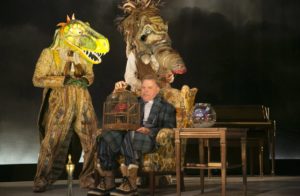
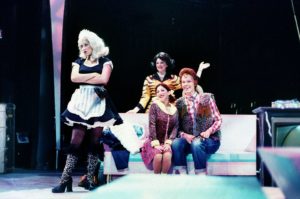
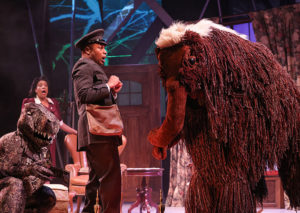
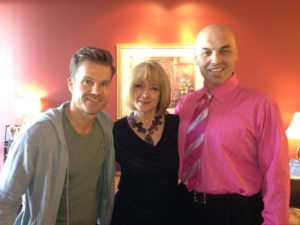
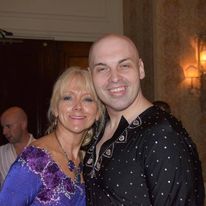

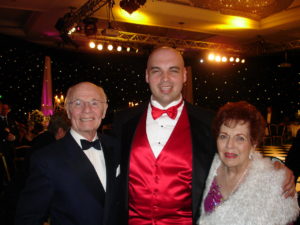


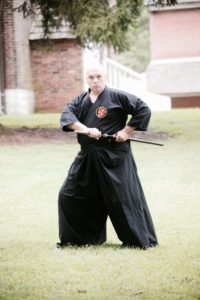

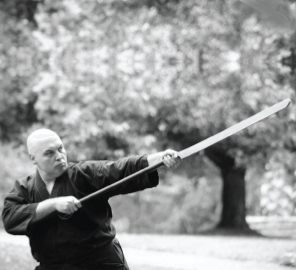 Promotional photos for Kiyojute Ryu Kempo and Honsho Kan. 2018.
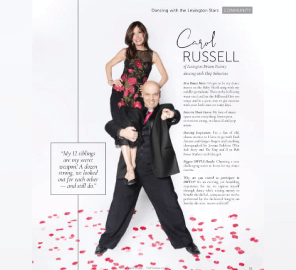
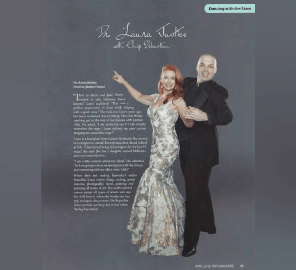 Promotional photos for Dancing with the Lexington Stars, the annual fundraiser of the Lexington Arthur Murray Dance Studio.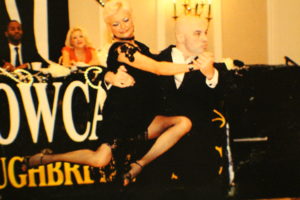
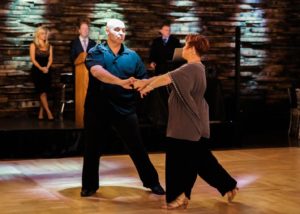 (L) A Theatrical Argentine Tango Routine with Clare Seagren. 2008. (R) Dancing with Astrid Wenke-Sebastian at a fundraiser. 2017.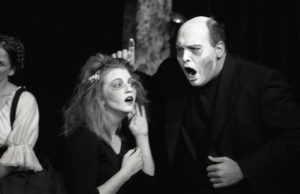
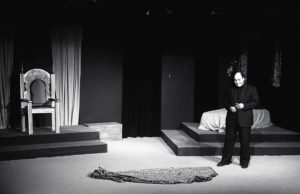 As Polonius, from FORTINBRAS. Studio Players, 2000.
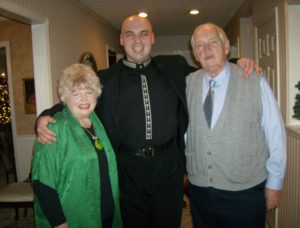 My parents, Virginia and Charles Sebastian, 2006.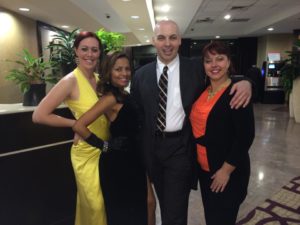
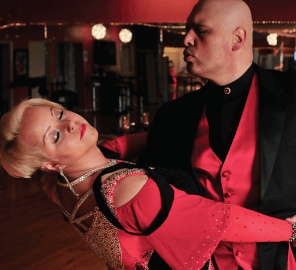 (L) Darcae (Amber) Pike, Cathya Franko, myself, Astrid. The lovely ladies of dance. (R) Promotional pic for Ballroom.
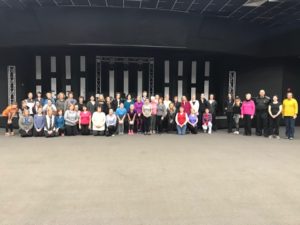 Teaching a Ladies-Only Self Defense Clinic, 2019.
 Awarding my mom here first Tai Chi Certification, 2009.
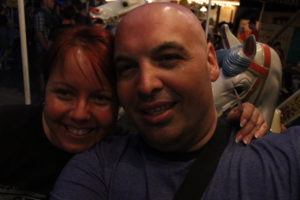 On an antique carousel with the fairest representative of the fairer sex. Ebbelwoi Fest in Langen, Germany. 2017.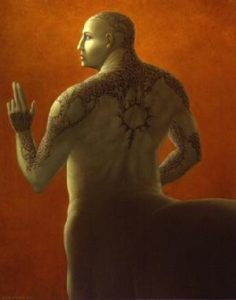
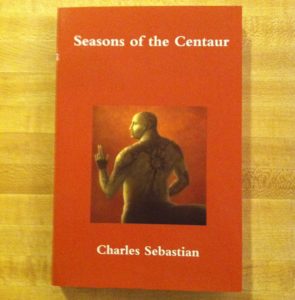 “Centaur” by British artist, George Underwood. George was kind enough to allow me to use the painting for the cover of my book of poetry, SEASONS OF THE CENTAUR, in which my homage to my dad, “Goodnight, my Father, Goodnight,” appeared. 2016.
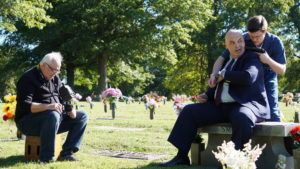 (L) On the set of ALWAYS IN OUR HEARTS (PER ANNUM), with Director Don Simandl, and Fred Zegelien. 2021. (R) Shooting a scene with Brodie Lietch.